Milky Way Quick Start Checklist
Welcome to the Dark Sky Utah Milky Way Photography Checklist! This tool provides you with a specific reminder of everything you need to take stunning photos of the Milky Way.
Milky Way Checklist and Instructions
Please fill out the form to access the checklist
Milky Way Quick Start Guide
How to Use the Checklist and Capture Your First Milky Way Photo
INTRODUCTION — WHAT THIS GUIDE IS (AND ISN’T)
This quick start guide is designed to help you understand why each step in the
Milky Way checklist matters.
If you’re brand new to night sky photography, the checklist alone can get you
started quickly in the field. This guide gives the context behind those steps so
you’re not just following settings blindly.
You don’t need expensive gear or advanced tracking equipment to capture
your first Milky Way photo. With the right timing, a simple setup, and a few key
techniques, you can get surprisingly good results.
This guide focuses on getting started. Advanced techniques, complex
blending, and cinematic time-lapses are covered in my course.
1. WHEN TO SHOOT — WHY TIMING MATTERS MORE THAN GEAR
The Milky Way core is visible roughly from March through October in the
Northern Hemisphere. The best months are usually May through August.
Moon phase is critical. Even a partially lit moon can wash out faint Milky Way
detail. Shoot during a New Moon or when the moon has already set. Planning
apps like PhotoPills or Stellarium help you know when and where to shoot.
Clear skies matter just as much. Weather apps like Accuweather, Windy, or
Astrospheric help predict cloud cover.
2. WHERE TO SHOOT — DARK SKIES MAKE EVERYTHING EASIER.
Light pollution reduces contrast. Aim for dark skies and avoid nearby artificial
lights. A strong foreground often matters more than perfect darkness. Online
light pollution maps can help you find dark sky sites near you.
3. GEAR — KEEP IT SIMPLE
A camera with manual controls, a wide-angle lens, and a tripod is enough to
get started. Extra batteries and a headlamp help. The Optional Gear listed
adds flexibility but isn’t required.
4. CAMERA SETTINGS — WHAT THE NUMBERS ACTUALLY DO.
Wide apertures let in more light. Higher ISO brightens the image. Shutter speed
must be limited to avoid star trails. Use Manual Mode and the settings from
the checklist. These settings are a starting point, not rigid rules.
5. FOCUS — THE MOST COMMON PROBLEM FOR BEGINNERS
Autofocus fails at night. Manual focus using Live View works best. Aim at a
bright star or distant light. Switch to Live View. Zoom in to 10x. Slowly turn the
focus ring until the star becomes as small and sharp as possible. Take a test
shot and zoom in to confirm sharpness. Recheck focus every 30-60 minutes as
temperatures change. Do not check focus when doing time-lapse videos.
6. COMPOSITION — WHY FOREGROUND MATTERS
Foreground adds scale and depth. Mountains, trees, and rock formations work
well. Don’t be afraid to shoot both vertical and horizontal frames. Place the
Milky Way to one side of the frame, about a 1/3 of the way from the edge.
Shoot both vertical and horizontal frames. A strong foreground often matters
more than perfect skies.
7. EDITING — KEEP IT SIMPLE AT FIRST
Import the RAW file into Lightroom. Adjust white balance. Increase exposure
slightly. Add contrast and clarity carefully. Reduce noise and fine-tune color.
Avoid over-processing. Advanced editing comes later.
NEXT STEPS
The checklist and this guide will help you capture your first Milky Way photo.
If you want to learn my complete advanced workflow, including shooting,
editing, and cinematic Milky Way time-lapses, you can explore my full course,
Milky Way in Motion
https://darkskyutah.com/milky-way-time-lapse-course/
About Carly Stocks & Dark Sky Utah
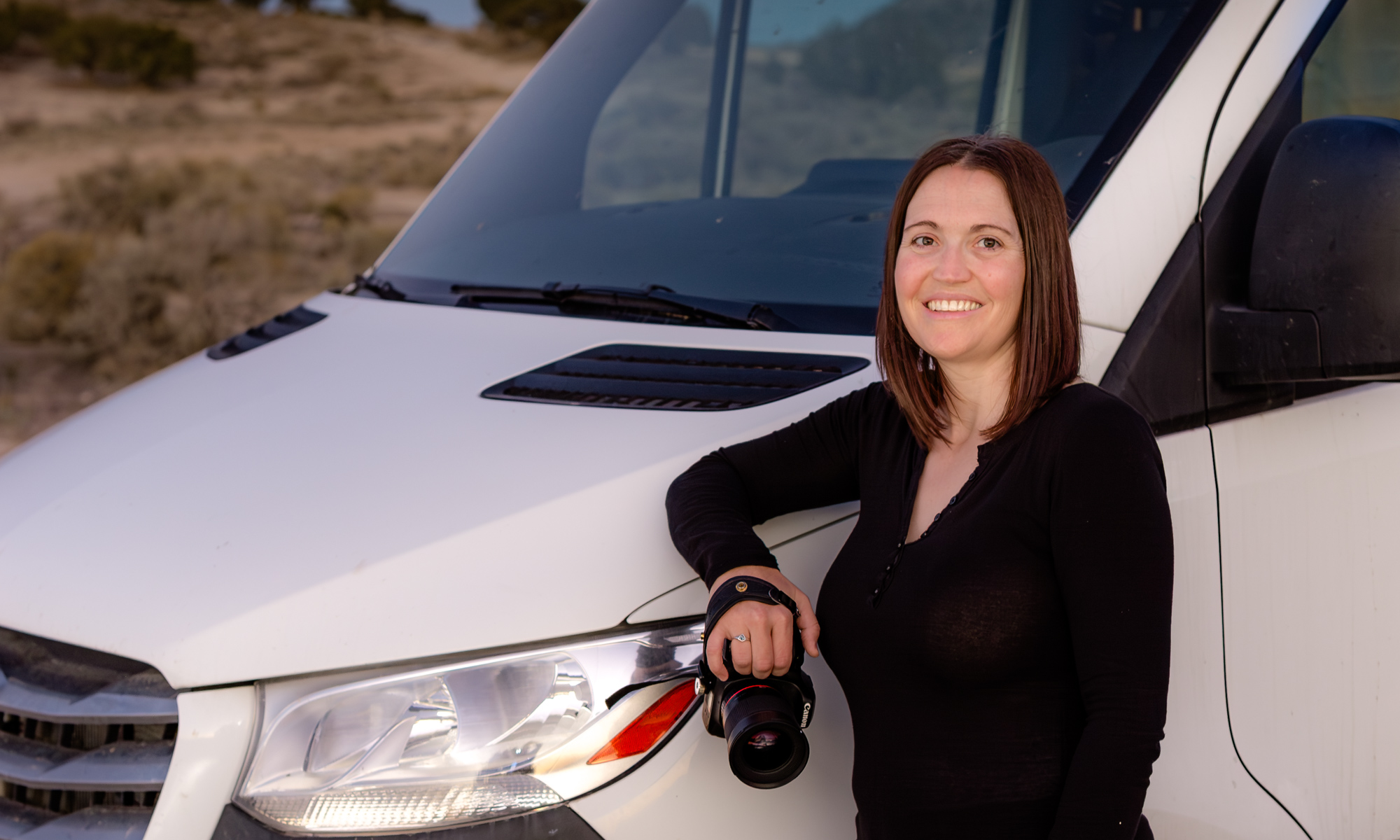
Carly Stocks is an award-winning photographer who is passionate about teaching others how to capture the Milky Way. Carly spent seven years teaching high school physics and now brings her expertise to her courses and content. She’s spent years photographing the Milky Way and honing her skills. From presenting at the NightScaper Conference, being published in USA Today, and winning international photography competitions, she’s learned what works. Carly has developed workflows and techniques that remove the guesswork, so you can easily capture night sky images you’re proud of.